
Have you ever dreamed of floating inside the International Space Station, walking on the Moon, or exploring the mysterious landscape of Mars?
Space travel may be out of reach for most of us, but virtual reality (VR) offers an exciting way to explore the universe from home.
With immersive environments and interactive simulations, you can experience what it might feel like to travel beyond Earth without boarding a spacecraft.
Table of Contents
Why Explore Outer Space in VR?
Here are a few reasons to give virtual space exploration a try:
- Explore from home: Discover simulated spacecraft, planetary landscapes, and orbital environments using compatible VR equipment.
- Learn through immersion: Visualise scientific concepts that can be difficult to understand through text alone.
- Experience extraordinary perspectives: See Earth from orbit or explore the surface of another world through a virtual viewpoint.
- Discover future possibilities: Explore conceptual space habitats and learn about technologies that may support future missions.
- Make learning more engaging: Space-themed VR experiences can turn astronomy and space exploration into interactive adventures.
Keep in mind that not every experience supports every VR headset. Some require a gaming PC, while others may be available on standalone headsets or through a web browser. Check compatibility, comfort settings, and system requirements before getting started.
Whether you’re a space enthusiast, a curious explorer, or a VR beginner, here are the list of outer space adventures worth discovering.
1. Explore the International Space Station (ISS)
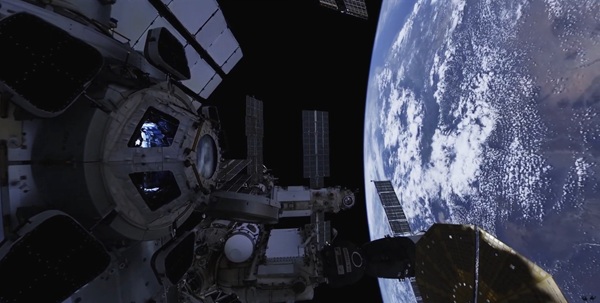
Imagine floating inside a spacecraft hundreds of kilometres above Earth, surrounded by scientific equipment and windows overlooking our planet.
The International Space Station is a real orbital laboratory where astronauts live and conduct scientific research. VR experiences can help you explore its modules, understand how astronauts work, and discover what life is like in microgravity.
Some experiences focus on realistic station tours, while others offer interactive educational activities.
Best for: Space enthusiasts who want to discover how astronauts live and work in orbit.
2. Experience a Spacewalk
What would it feel like to step outside a spacecraft and look down at Earth from space?
A spacewalk is one of the most extraordinary activities an astronaut can perform. In suitable VR simulations, you can experience the perspective of an astronaut outside a spacecraft, surrounded by the vastness of space.
You may get to inspect spacecraft structures, move around a station, or complete tasks while secured to a virtual spacecraft.
Of course, a simulation cannot fully reproduce the physical sensations or dangers of a real spacewalk.
Best for: Anyone curious about the challenges of working outside a spacecraft.
3. Float in Zero Gravity
On Earth, gravity keeps us firmly on the ground. In orbit, astronauts experience apparent weightlessness as they and their spacecraft continuously fall around Earth.
Some VR simulations recreate this sensation visually, allowing you to move through spacecraft interiors, turn in unusual directions, and experience environments where up and down no longer feel the same.
Depending on the experience, you may also learn how astronauts move and handle objects in microgravity.
Best for: Explorers who want to experience a different way of moving through an environment.
4. Walk on the Moon
The Moon is one of the most iconic destinations in space exploration.
Imagine standing on its dusty surface, looking at the black sky, and seeing Earth hanging above the horizon. VR lunar experiences can recreate this remarkable landscape and give you a closer look at the environment visited by Apollo astronauts.
Some simulations also include lunar exploration activities, historical missions, or educational information about the Moon.
Best for: Anyone who dreams of taking their first steps on another world.
5. Drive a Lunar Rover
Walking across the Moon is exciting, but exploring it with a lunar rover opens up even more possibilities.
A lunar rover is a vehicle designed to help astronauts travel across the lunar surface and investigate areas beyond their immediate landing site.
Depending on the VR experience, you may be able to drive a simulated rover, navigate rocky terrain, and explore craters or distant geological features.
It’s an opportunity to discover how technology helps astronauts investigate an unfamiliar world.
Best for: Space explorers who enjoy vehicles, navigation, and hands-on simulations.
6. Discover What a Moon Base Could Look Like
What if humans could one day establish a permanent base on the Moon?
Scientists and space agencies are studying technologies that could support future lunar missions, including habitats, life-support systems, and ways to use local resources.
VR environments can help you visualise concepts for future lunar bases, from astronaut living quarters to research facilities and exploration equipment.
Some experiences are educational visualisations rather than playable simulations, so check the description before choosing one.
Best for: Future-focused explorers interested in space technology and human settlement beyond Earth.
7. Explore the Surface of Mars
Mars has fascinated scientists and explorers for generations. Its reddish landscape, enormous volcanoes, deep valleys, and ancient geological features make it one of the most interesting destinations in our solar system.
VR experiences can transport you to simulated Martian landscapes, letting you look around the terrain and imagine what it would be like to stand on another planet.
Some environments are inspired by scientific imagery and data collected by Mars orbiters and robotic missions.
Best for: Anyone curious about the Red Planet and the possibility of future human exploration.
8. Drive a Mars Rover
Before humans can explore Mars in person, robotic rovers help scientists investigate its surface.
Vehicles such as NASA’s Curiosity and Perseverance rovers study Martian rocks, soil, and environmental conditions. Their discoveries help researchers understand the planet’s history and assess its potential to support ancient microbial life.
In a suitable VR simulation, you may be able to operate a virtual rover, navigate rough terrain, or investigate features of a simulated Martian landscape.
Best for: Curious explorers who enjoy science, robotics, and remote exploration.
9. Visit a Future Mars Habitat
Imagine waking up in a habitat on Mars, checking life-support systems, and looking through a window at the rocky landscape outside.
Although humans have not yet established a settlement on Mars, virtual environments can help us visualise what future habitats might look like.
Depending on the experience, you could explore living quarters, research facilities, greenhouses, or conceptual systems designed to support astronauts during long missions.
These environments are often speculative designs, so treat them as possible concepts rather than representations of an existing Martian settlement.
Best for: People fascinated by the future of human space exploration.
10. Travel Through the Solar System
Why stop at the Moon and Mars when there is an entire solar system to explore?
Some VR experiences let you discover planets, moons, and other celestial objects from an immersive perspective. You can visualise the scale of the solar system, observe planetary features, and learn how these worlds differ from Earth.
Depending on the experience, you might visit the rings of Saturn, examine the giant storms of Jupiter, or explore the icy landscapes of distant moons.
These journeys may be educational simulations rather than physically realistic spacecraft missions, but they can still make astronomy more engaging and accessible.
Best for: Anyone who wants to explore beyond Earth and discover more about our cosmic neighbourhood.
Final Thoughts
From floating aboard the International Space Station to exploring the dusty plains of Mars, virtual reality offers exciting ways to imagine life beyond Earth.
You may not be able to book a real trip to the Moon or Mars today, but VR can help you discover these extraordinary destinations from your own home.
If you’re new to virtual exploration, check out our Ultimate Beginner’s Guide to Virtual Travel to learn how to get started and discover more ways to explore the world virtually.
Ready to Explore Space in Virtual Reality?
With the right VR headset, you can discover immersive space environments, experience virtual space missions, and explore destinations far beyond our planet.
Whether you’re looking for an affordable way to experience VR on your smartphone or a standalone headset for more immersive adventures, here are three VR headsets worth checking out.
Explore your options below and find the right VR headset for your next virtual adventure!
Disclosure: This article contains affiliate links. We may earn a commission if you make a purchase through these links, at no additional cost to you.
1. VRG Pro
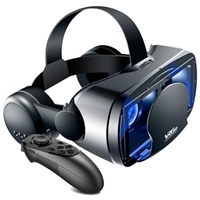
For smartphone-based VR
A budget-friendly option for readers who want to explore basic 360° videos and compatible VR content using a smartphone. Check Price
2. Meta Quest 3S
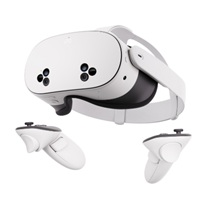
For standalone VR adventures
A standalone headset for exploring compatible VR games, immersive environments, and interactive experiences without needing a smartphone or PC for standalone content. Check Price
3. Meta Quest 3
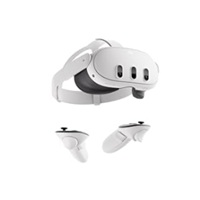
For a premium standalone VR experience
A higher-end option with sharper pancake optics and colour passthrough mixed reality, suitable for compatible immersive games and experiences. Check Price
About The Author
